

PARENTING IN ISLAM
DESIGN BY NAZNEEN SADAT
Islamic Parenting: Raising Children with Faith, Love, and Wisdom
Islamic parenting is a responsibility and trust (Amanah) from Allah. It is not merely about raising obedient children but about nurturing individuals who are spiritually grounded, emotionally secure, morally responsible, and compassionate. Guided by the Qur’an and the teachings of Prophet Muhammad ﷺ, Islamic parenting emphasizes love, mercy, justice, discipline, and good character.
In today’s world, parents face challenges such as social media, peer pressure, academic pressure, and changing family relationships. Islamic principles can help parents address these challenges while maintaining a balance between faith, education, emotional well-being, and personal development.
1. Parenting as a Responsibility in Islam
Parents are responsible for their children’s physical, emotional, intellectual, moral, and spiritual development. Their duties extend beyond providing food, shelter, and education to teaching values, offering emotional support, and preparing children to become responsible members of society.
The Qur’an states:
“O you who have believed, protect yourselves and your families from a Fire…” — Qur’an 66:6
This verse reminds parents of their responsibility to guide and protect their families. Islamic parenting therefore requires patience, wisdom, and a commitment to leading by example.
2. Rights of Children in Islam
Islam recognizes the dignity and rights of children. Parents should provide:
Protection and care: Safeguarding children from neglect, abuse, and harm.
Love and affection: Creating a safe and supportive emotional environment.
Education: Encouraging religious learning, academic achievement, and useful skills.
A good name and dignity: Respecting children's identity and self-worth.
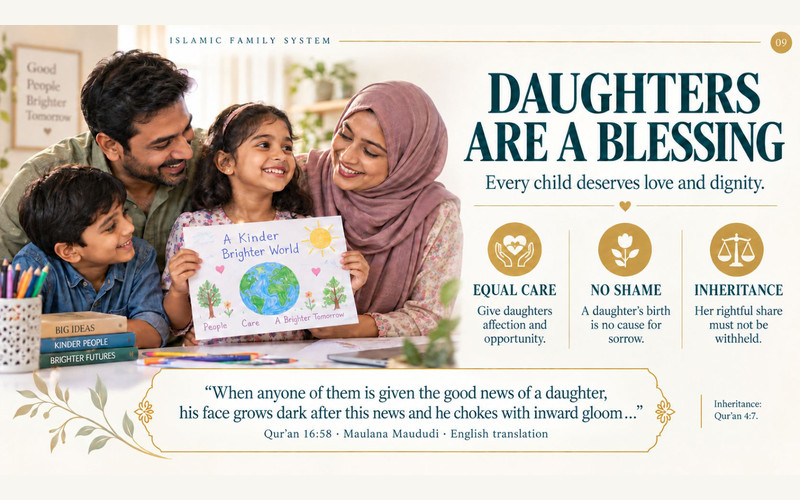
Fair treatment: Avoiding unjust favoritism and treating children with fairness.
Moral and spiritual guidance: Teaching faith, honesty, kindness, patience, and responsibility.
Fulfilling these rights helps children develop confidence, trust, and a strong sense of belonging.
3. Teaching Faith, Values, and Good Character
Islamic parenting emphasizes Iman (faith) and Akhlaq (good character). Parents can nurture faith by teaching children about Allah, encouraging prayer, reading the Qur’an together, and explaining Islamic values through everyday experiences.
Surah Luqman (Qur’an 31:13–19) provides an excellent example of parental guidance. Luqman advises his son about belief in Allah, prayer, patience, humility, and good conduct. His advice demonstrates the importance of teaching through conversation, wisdom, and encouragement.
Parents should also model the qualities they expect from their children. Honesty, kindness, respect, gratitude, and responsibility are best taught through consistent actions. Children often learn more from observing their parents than from listening to instructions alone.
4. Love, Mercy, and Positive Discipline
Love and compassion are essential to Islamic parenting. Prophet Muhammad ﷺ emphasized mercy, saying:
“He who does not show mercy will not be shown mercy.” — Sahih al-Bukhari and Sahih Muslim
Parents should listen to their children, understand their feelings, and provide reassurance during difficult times. Affection builds trust and encourages children to seek guidance when they face problems.
Discipline should focus on teaching rather than humiliating or harming children. Parents can establish clear boundaries, explain consequences, encourage good behavior, and correct mistakes patiently. Violence, abuse, and humiliation should never be confused with positive discipline.
A balanced approach combines affection with appropriate rules, helping children develop self-control, accountability, and sound judgment.
5. Justice, Communication, and Education
Islam emphasizes fairness among children. In a well-known narration recorded in Sahih al-Bukhari and Sahih Muslim, the Prophet ﷺ instructed parents to be just among their children. Parents should avoid harmful comparisons and favoritism while recognizing that individual children may have different needs.
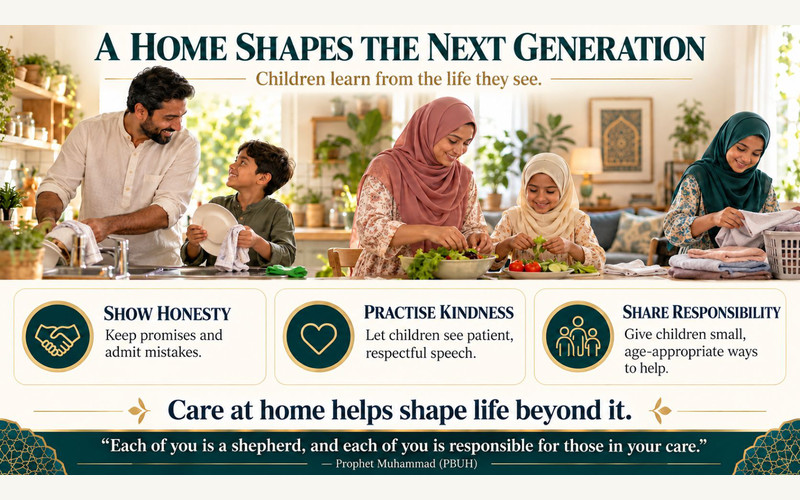
Communication is equally important. Listening without immediately judging, encouraging questions, and speaking respectfully help build strong family relationships. Children should be involved in age-appropriate decisions so that they gradually develop independence and responsibility.
Islamic parenting also values both religious and worldly education. Parents should encourage children to pursue academic studies, useful skills, sports, and creative interests while maintaining their ethical and spiritual values.
6. Misconceptions About Islamic Parenting in India
Islamic parenting is sometimes misunderstood or confused with rigid cultural practices. Some common misconceptions include:
Myth: Islamic parenting means harsh control.
Reality: Mercy, patience, affection, and wise guidance are important Islamic principles.
Myth: Children must obey without asking questions.
Reality: Parents can encourage respectful questions and explain the reasons behind their guidance.
Myth: Discipline means physical punishment.
Reality: Discipline should teach responsibility, boundaries, and self-control without abuse or humiliation.
Myth: Only religious education matters.
Reality: Islamic parenting also encourages beneficial knowledge, practical skills, and positive contributions to society.
Myth: Boys deserve more importance than girls.
Reality: Children deserve dignity, fairness, and appropriate care without unjust favoritism.
Myth: Islamic parenting is incompatible with modern Indian society.
Reality: Muslim families can maintain their faith while participating in education, careers, technology, sports, and India's diverse social and cultural life.
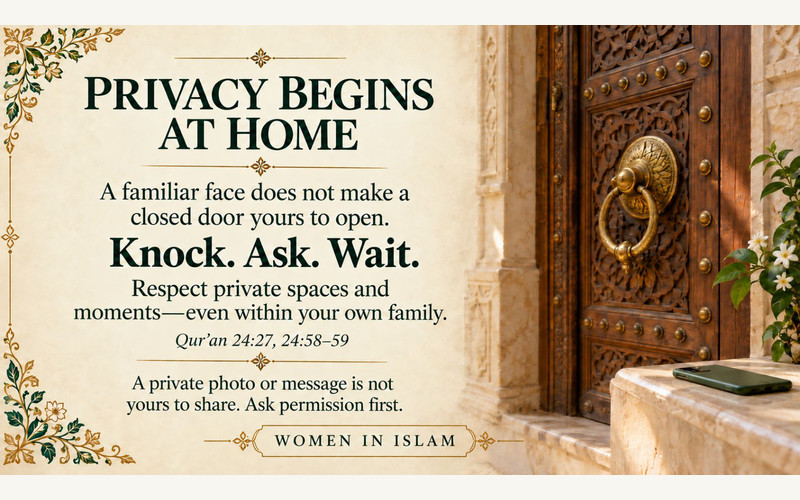
These distinctions help families separate Islamic values from harmful practices and create an environment that supports children's growth and well-being.
7. Modern Challenges and Practical Parenting Tips
Modern parents must address excessive screen time, social media, peer pressure, academic stress, and the growing need for emotional support. Rather than isolating children from the modern world, parents should prepare them to navigate it responsibly while remaining connected to their values.
Practical ways to apply Islamic parenting include:
Praying and reading the Qur’an together.
Spending quality time as a family.
Encouraging open discussions and respectful questions.
Praising honesty, kindness, and responsible behavior.
Setting reasonable boundaries for technology use and daily routines.
Balancing religious education with academic learning and recreation.
Making dua for children's guidance, well-being, and success.
Consistent care, positive communication, and personal example can help parents build stronger relationships with their children.
Conclusion: From Control to Character
Islamic parenting is rooted in faith, love, mercy, justice, responsibility, and wisdom. It encourages parents to guide children without relying on fear, nurture their character alongside their education, and respect their dignity as they grow.
The ultimate goal is to raise children who are spiritually grounded, emotionally confident, morally responsible, and beneficial to society. By combining Islamic teachings with compassionate parenting and thoughtful guidance, families can prepare children to uphold their values while participating positively in the modern world.
Islamic parenting is not about raising children through fear; it is about raising them with faith, love, character, responsibility, and wisdom.