Faith, Purpose & Responsibility

Faith, Purpose & Responsibility

Understanding Islamic Beliefs, Values and the Meaning of Jihad.

Understanding Islam for the first time
Faith, Purpose & Responsibility

Understanding Islam for the first time

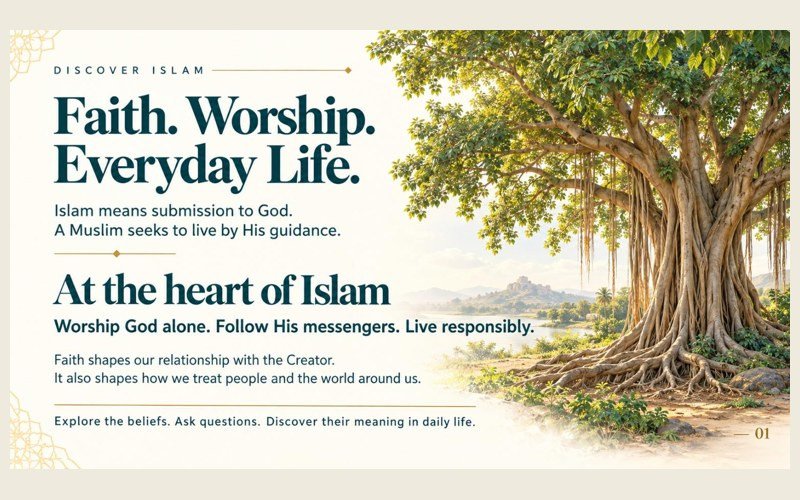
Islam is a religion centred on worshipping one God and living responsibly before Him. The word Islam expresses submission to God. A Muslim is someone who follows this faith. Its teachings connect belief with prayer, family life, work and the…
The six foundations of faith
Faith, Purpose & Responsibility

The six foundations of faith

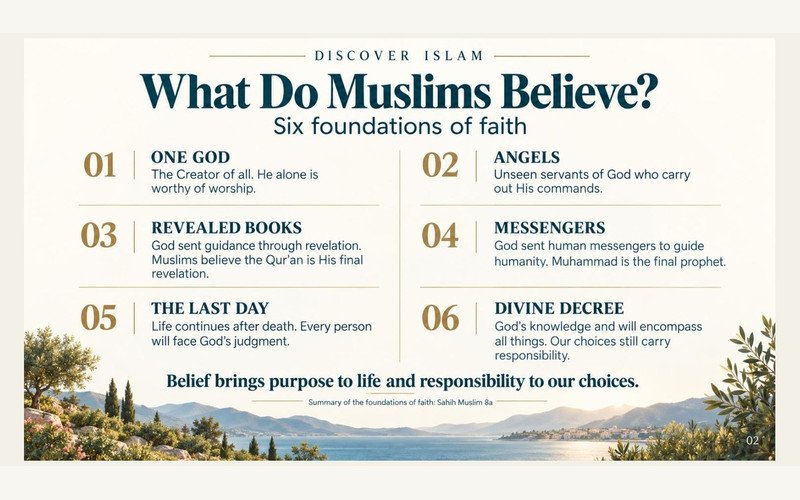
Islam describes human life as a relationship with a Creator who gives guidance and holds people responsible. Prophet Muhammad (PBUH) — Sahih Muslim 8a — describes six foundations of faith. They concern God, angels, revealed books, messengers,…

Who is Allah
Faith, Purpose & Responsibility

Who is Allah

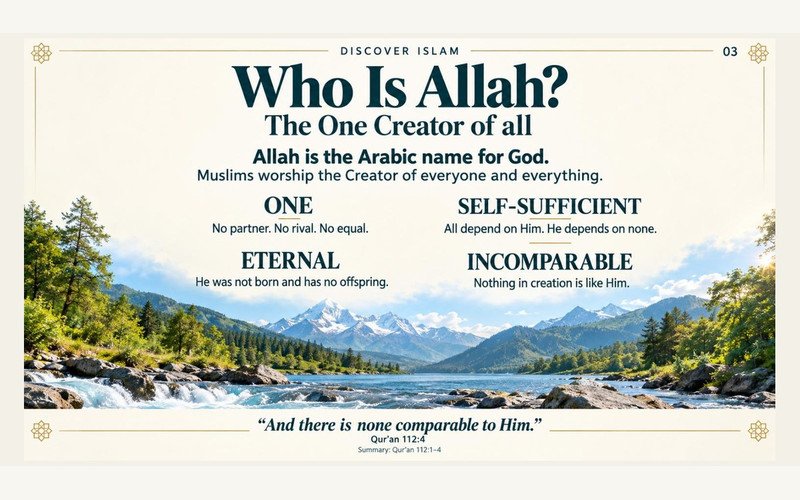
Allah is the Arabic name for God. In Islamic teaching, this is the Creator of every person and the whole universe, not a deity limited to one race or country. The Arabic word ilah can refer to a deity; Allah functions as the name of the one…

The beautiful names of God
Faith, Purpose & Responsibility

The beautiful names of God

The names describe qualities of the one God, not different gods. The Qur'an speaks of God’s most beautiful names. Saying of Prophet Muhammad (PBUH) — Sahih al-Bukhari 2736 — gives special importance to knowing ninety-nine names. The report…

Forgiveness and making a fresh start
Faith, Purpose & Responsibility

Forgiveness and making a fresh start

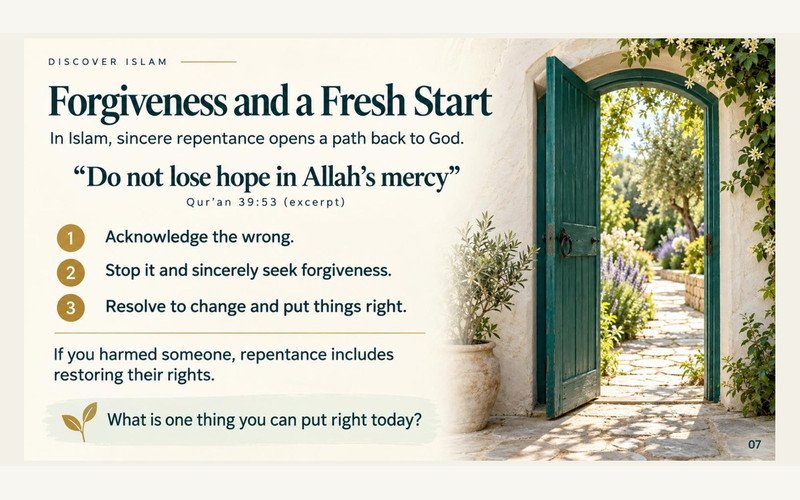
The Qur'an addresses people who have wronged themselves and tells them not to despair of God's mercy. The next verse calls them to return to God. Read together, these passages offer hope and invite change. They do not suggest that harming…

Worship in ordinary life
Faith, Purpose & Responsibility

Worship in ordinary life

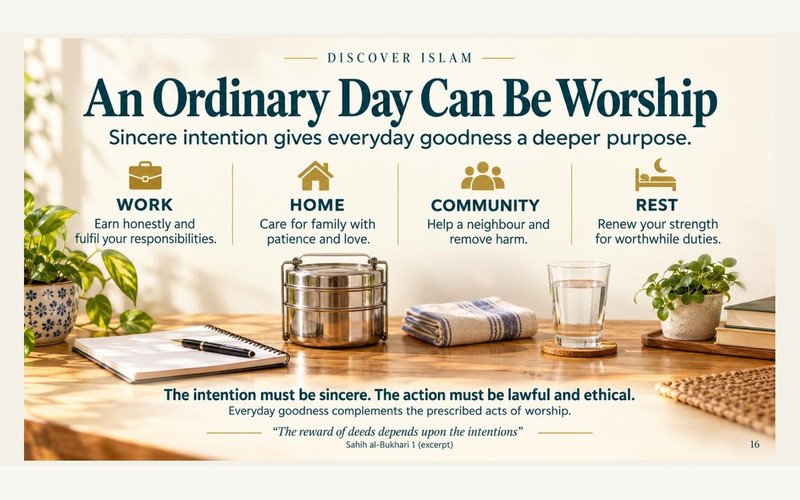
Ibadah is often translated as worship. It includes prescribed practices such as prayer, but its wider meaning covers living in willing obedience to God. Honest work, care for family and helping a neighbour can have religious value when the…

The five pillars of Islam
Faith, Purpose & Responsibility

The five pillars of Islam

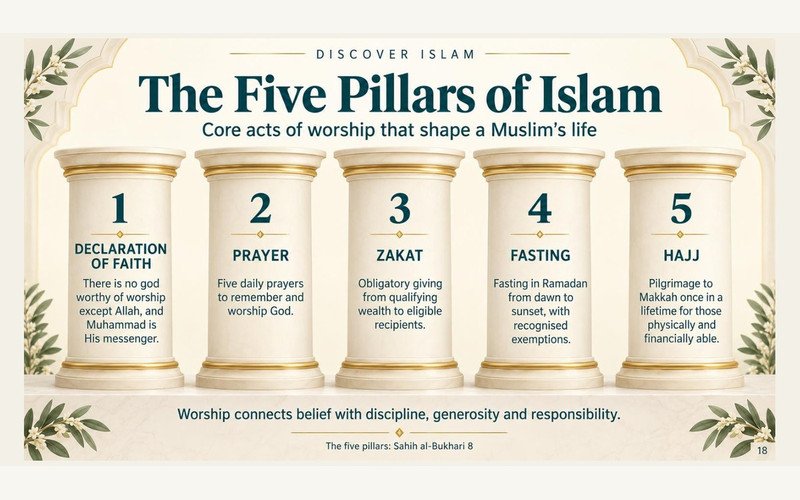
The five pillars are central acts through which Muslim faith is expressed. Prophet Muhammad (PBUH) — Sahih al-Bukhari 8 — lists these five practices. They give worship a regular place in life, while also connecting it with generosity and…

The call to prayer
Faith, Purpose & Responsibility

The call to prayer

The adhaan, often called azaan in India, announces a time for prescribed prayer. A caller known as a muezzin recites it. Its words affirm God's greatness, declare faith in God and His messenger, and invite people to prayer and spiritual…

Why Muslims pray five times a day
Faith, Purpose & Responsibility

Why Muslims pray five times a day

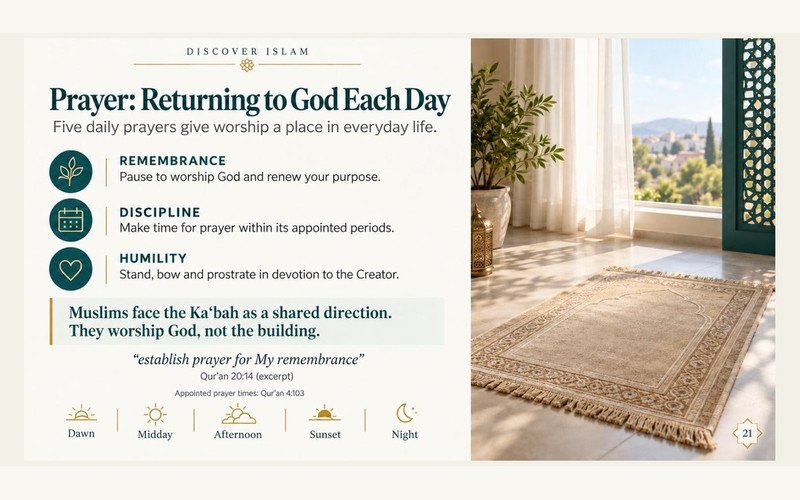
Salah is the prescribed form of Muslim prayer, commonly called namaz in India. Its five daily periods are dawn, midday, afternoon, sunset and night. Prayer includes recitation, standing, bowing and prostration, with adaptations for people who…

Ramadan and the purpose of fasting
Faith, Purpose & Responsibility

Ramadan and the purpose of fasting

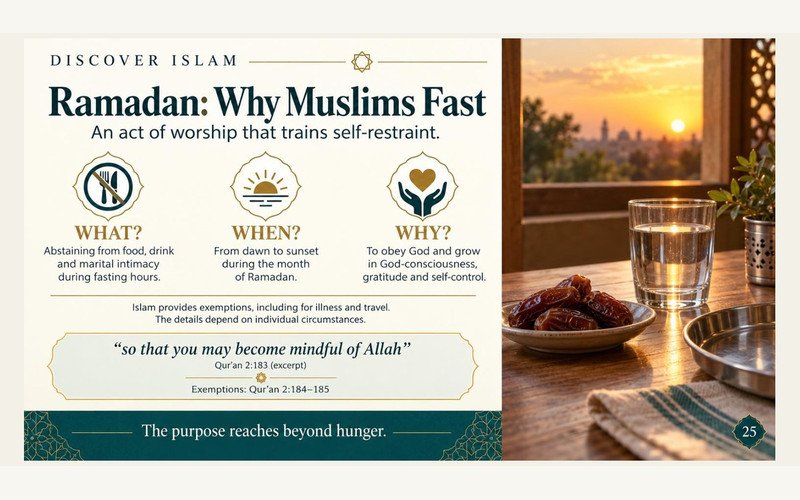
Ramadan is a month in the Islamic lunar calendar. During its daily fast, Muslims who are required and able to fast abstain from food, drink and sexual relations from dawn until sunset. Food and drink are permitted at night. The fast begins at…

Zakat and responsibility for wealth
Faith, Purpose & Responsibility

Zakat and responsibility for wealth

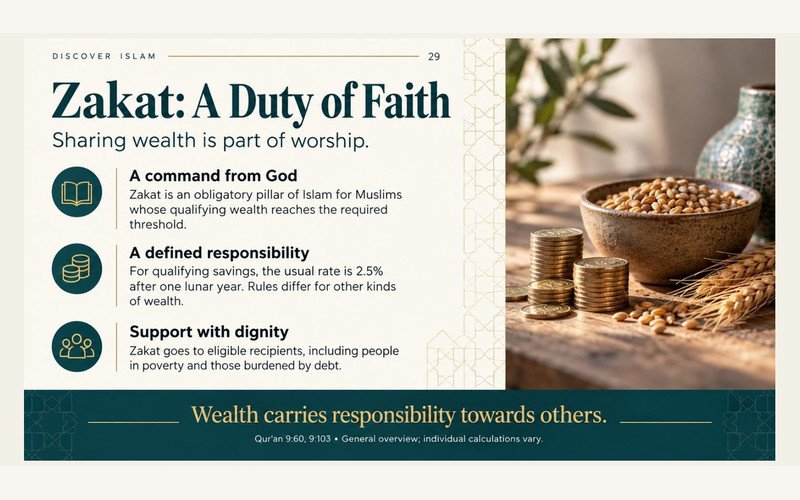
Zakat is obligatory giving from qualifying wealth to specified recipients. It is one of Islam's five pillars. Its religious purpose includes recognising responsibility towards people in need and resisting the idea that wealth carries no duties.…

Zakat in action in India
Faith, Purpose & Responsibility

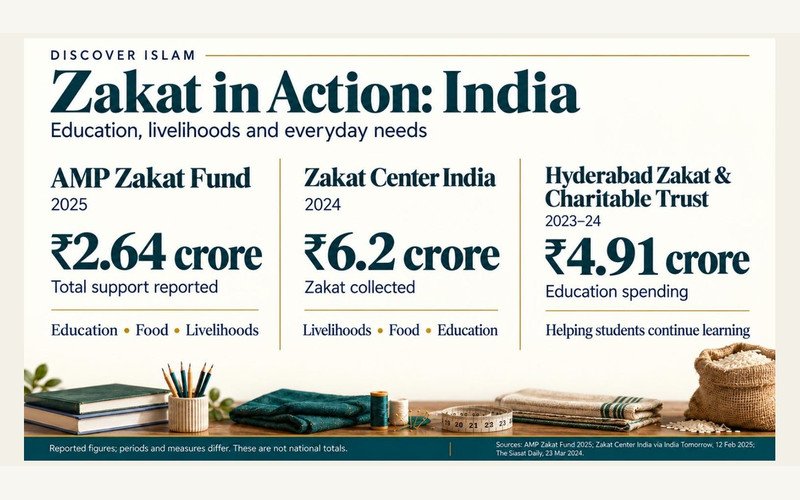
Zakat in action in India

Indian organisations apply zakat through education support, food assistance and opportunities to earn. Their reports provide examples of what donors fund. These are organisation-reported activities, sometimes described through press reports,…

Hajj and the practice of humility
Faith, Purpose & Responsibility

Hajj and the practice of humility

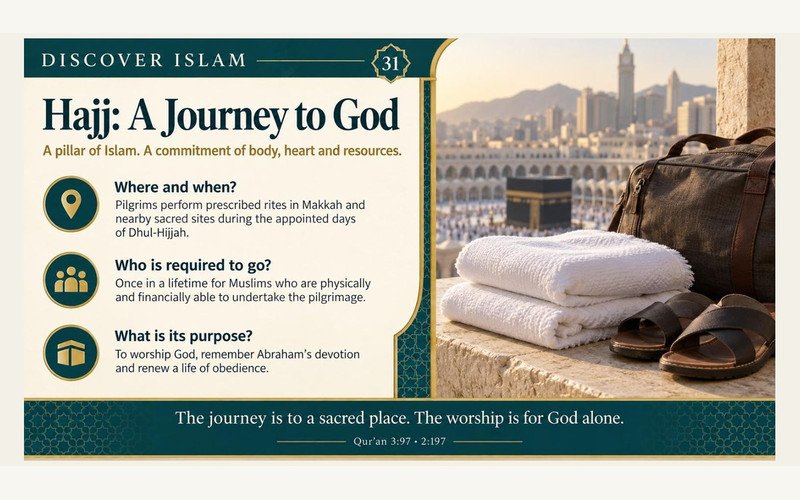
Hajj is the pilgrimage to Makkah and nearby sacred sites during appointed days of the lunar month of Dhul-Hijjah. It involves prescribed rites and is required once in a lifetime for Muslims who meet its conditions of ability. Financial means…

Faith and the rights of other people
Faith, Purpose & Responsibility

Faith and the rights of other people

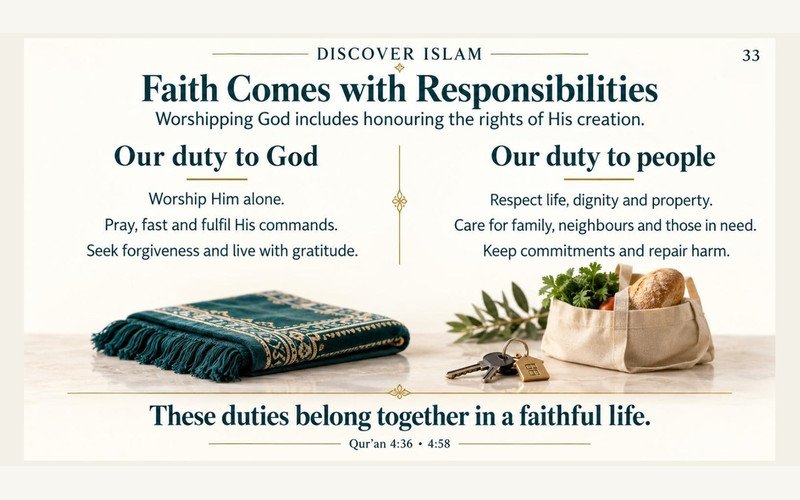
The Qur'an brings worship of God together with care for parents, relatives, orphans, people in need and neighbours. Verse Qur'an 2 : 177 explains righteousness through belief, giving, prayer, keeping commitments and endurance. Religious…

Truthfulness and keeping trust
Faith, Purpose & Responsibility

Truthfulness and keeping trust

The Qur'an calls for trusts to be returned to their rightful owners and for people to be truthful. A trust may be money, a borrowed item, confidential information or responsibility for someone else's work. These duties apply in ordinary…

Mercy and humility in everyday life
Faith, Purpose & Responsibility

Mercy and humility in everyday life

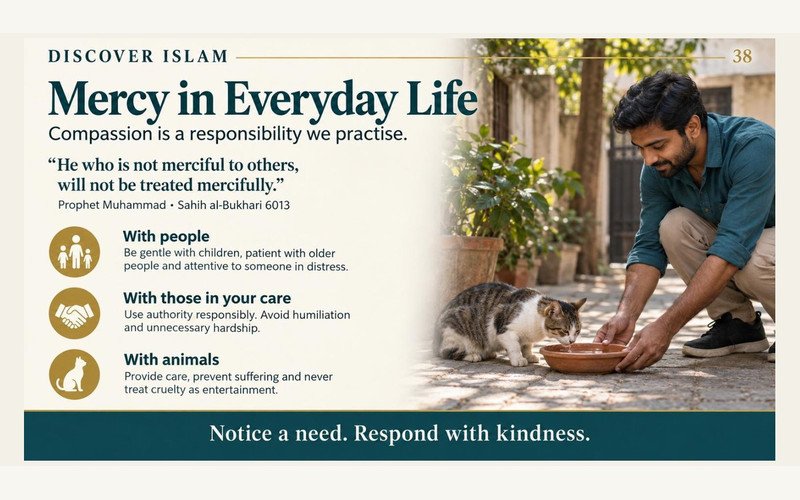
Prophet Muhammad (PBUH) — Sahih al-Bukhari 6013 — connects receiving mercy with showing mercy to others. Kindness is therefore not merely a pleasant feeling. It can involve listening to a distressed person, being gentle with children or…

Earning honestly and sharing wealth
Faith, Purpose & Responsibility

Earning honestly and sharing wealth

Islam permits earning through useful work, trade and investment that meet its ethical requirements. It does not require everyone to possess the same amount of wealth. It does ask how money was acquired, what obligations accompany it and whether…

Why Islam prohibits interest on loans
Faith, Purpose & Responsibility

Why Islam prohibits interest on loans

The Qur'an permits trade and prohibits riba. Riba covers prohibited increases in specified transactions. In the mainstream position represented by the International Islamic Fiqh Academy, a stipulated increase on a money loan is prohibited,…

What halal and haram mean
Faith, Purpose & Responsibility

What halal and haram mean

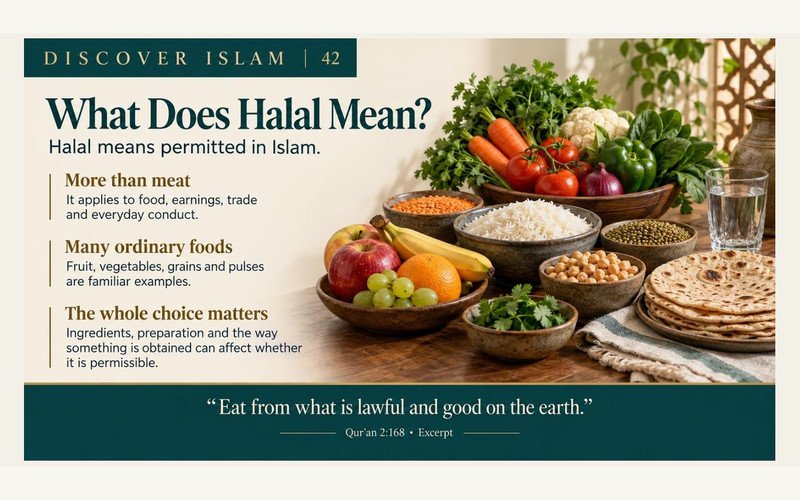
Halal means permitted in Islam. Haram means prohibited. Although these words often appear in discussions about meat, they also apply to earning, trade and conduct. Honest income can be described as halal; theft and bribery are prohibited. The…

What halal certification checks
Faith, Purpose & Responsibility

What halal certification checks

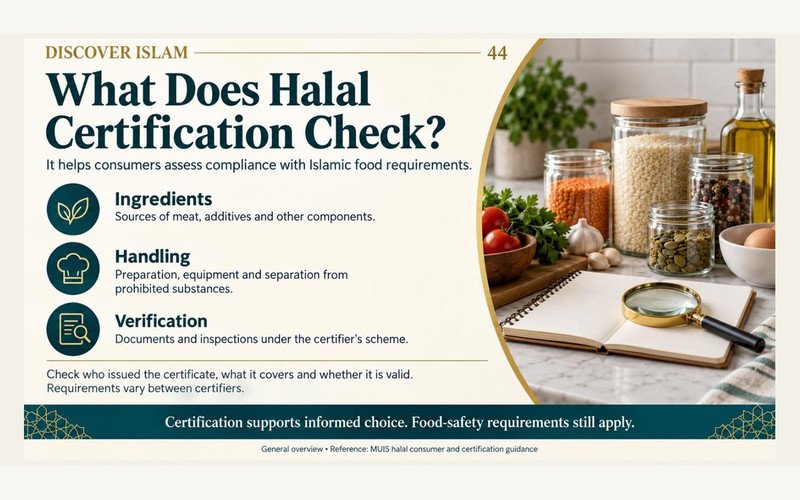
Halal certification is a process through which a certifying organisation assesses whether a product or process meets the requirements of its scheme. Depending on the product, checks may include ingredients, animal sources, processing aids,…

Eid al Adha and sharing with others
Faith, Purpose & Responsibility

Eid al Adha and sharing with others

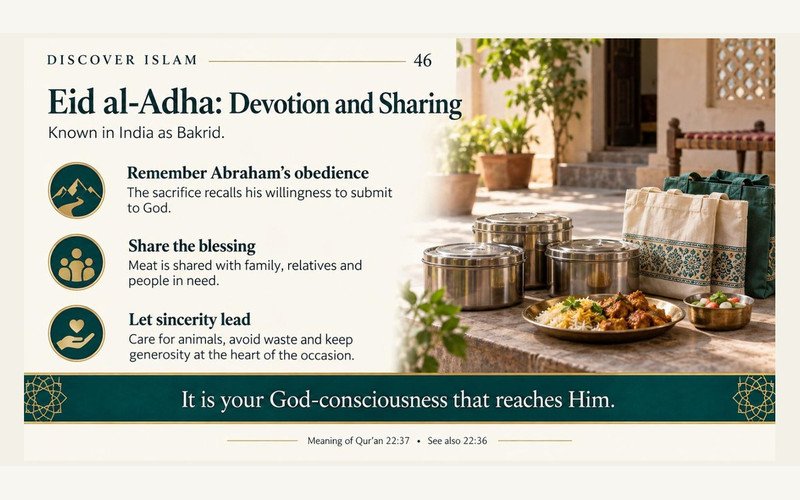
Eid al-Adha, commonly called Bakrid in India, is a Muslim festival associated with Abraham's willingness to obey God. In the Qur'anic account, Abraham and his son submit to the test, and the son is ransomed with a great sacrifice. The passage…

Bakrid and livelihoods in India
Faith, Purpose & Responsibility

Bakrid and livelihoods in India

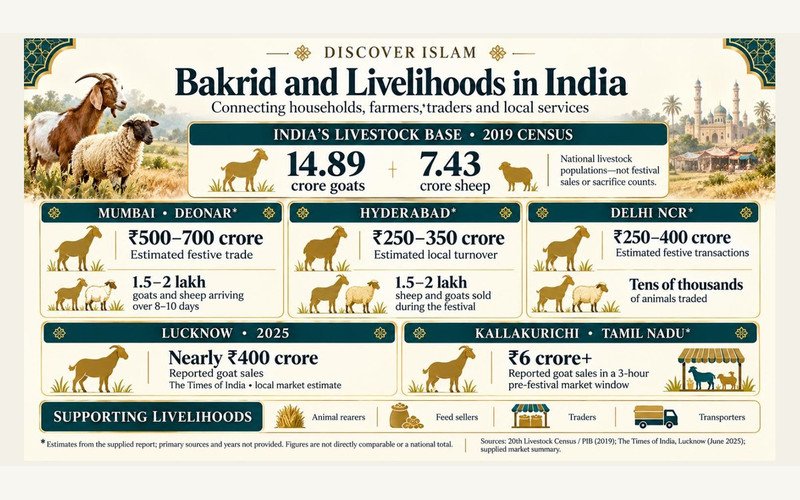
Demand around Bakrid connects livestock rearers, traders, transport workers, fodder sellers and other services. This is a practical economic relationship alongside the festival's religious meaning. The people involved can come from different…

Modesty as a shared responsibility
Faith, Purpose & Responsibility

Modesty as a shared responsibility

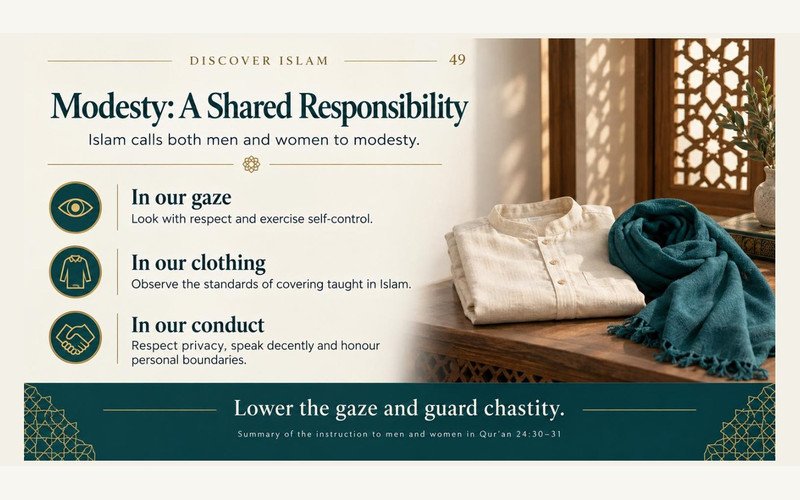
The Qur'an first tells believing men to lower their gaze and guard their chastity, then addresses women with related duties and instructions about dress. Modesty therefore concerns how people look, act and dress. It is not a duty placed only on…

Jihad: More Than a Battle
Faith, Purpose & Responsibility

Jihad: More Than a Battle

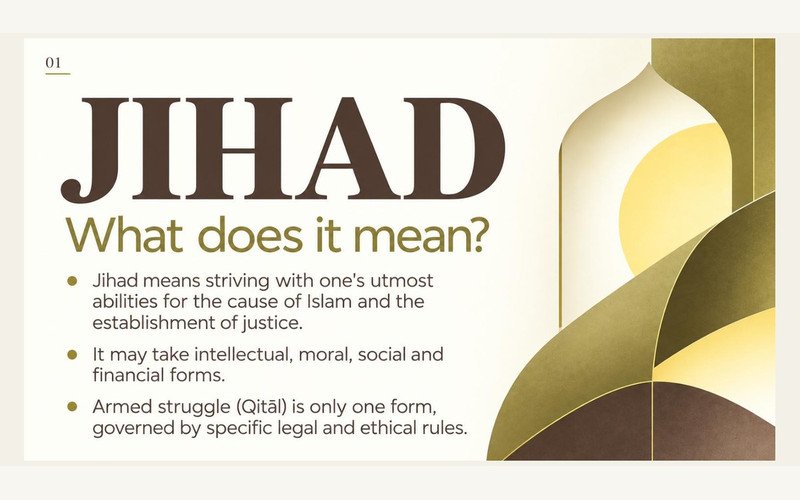
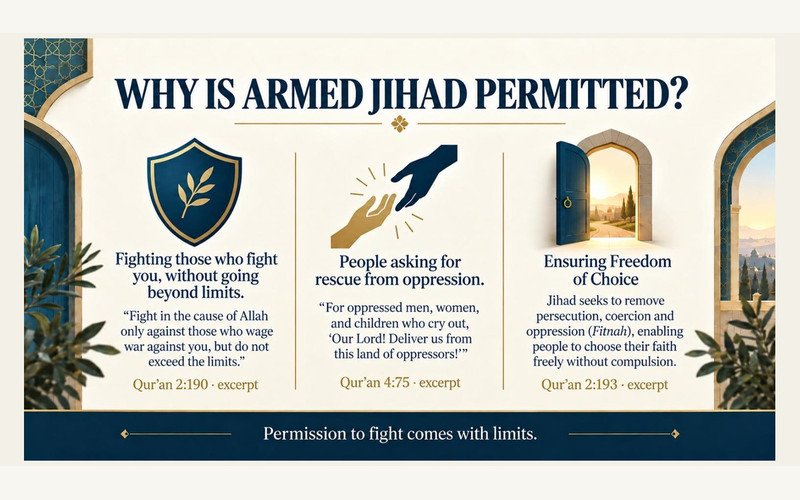
The way “JIHAD” meaning is portrayed in mainstream media, TV shows, news channels, etc., for many people, including those Muslims who are not regular readers of Islamic literature, it means armed conflict, striking civilians or military attack…

What Is Terrorism?
Faith, Purpose & Responsibility

What Is Terrorism?

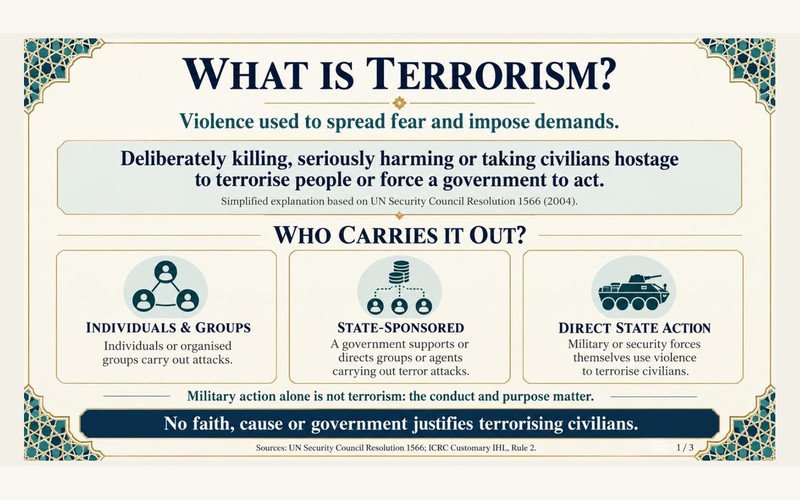
UN Security Council Resolution 1566 (2004) defines Terrorism as the deliberate killing, serious harming, or hostage-taking of civilians in order to terrorize people or force a government to act, in a way terrorists want.