
Related slides 44–45
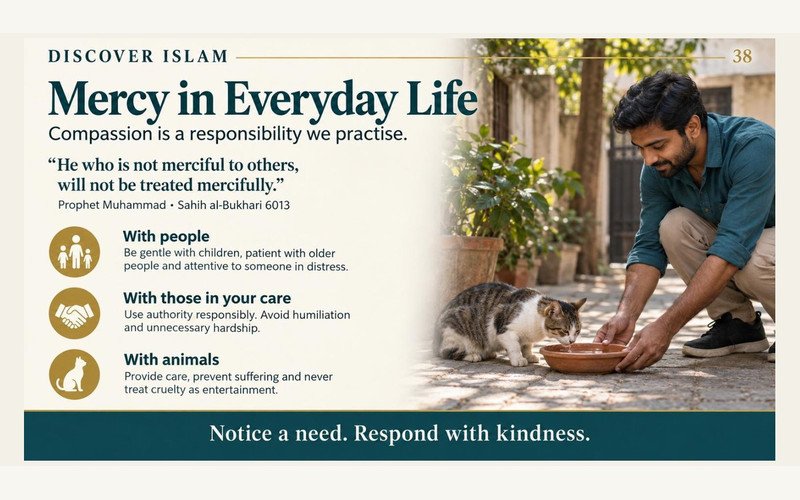
Compassion is expressed through conduct
Prophet Muhammad (PBUH) — Sahih al-Bukhari 6013 — connects receiving mercy with showing mercy to others. Kindness is therefore not merely a pleasant feeling. It can involve listening to a distressed person, being gentle with children or avoiding needless humiliation when correcting a mistake. People with authority have particular opportunities to practise it.
Strength without contempt
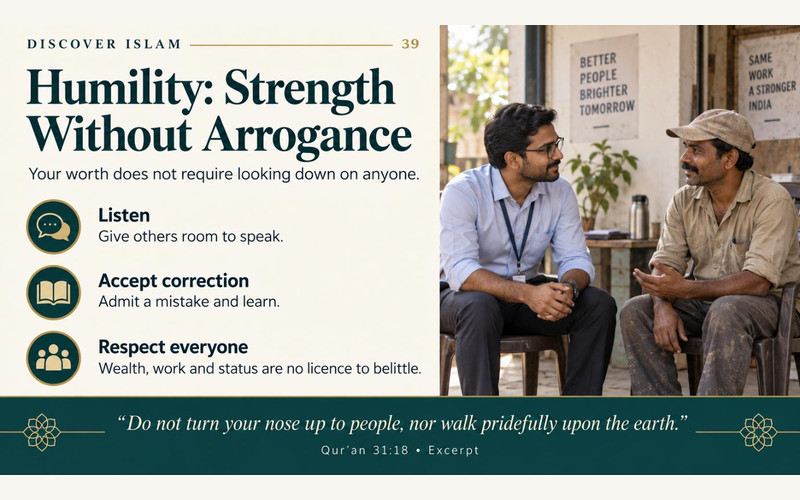
Humility means recognising one's limits and refusing to treat others as inferior. It does not require denying one's skills or accepting mistreatment. Qur'an 31 : 18–19 criticises arrogant behaviour and urges moderation in conduct and voice. The passage appears within advice given by Luqman to his son.
At work, humility may mean accepting a useful suggestion from a junior colleague. At home, it may mean admitting that a parent has made a mistake. Respect should not depend on whether someone is wealthy, fluent in English or engaged in prestigious work.
Animals also matter
Responsibility extends to animals in human care. Providing water, handling an animal gently and avoiding cruelty are part of that responsibility. Prophet Muhammad (PBUH) — Sahih Muslim 1955a — requires care even in the context of slaughter. The existence of permission to use animals for food does not make suffering irrelevant.
Mercy does not mean that every difficult decision can be avoided. A teacher may need to enforce a fair rule, and a harmed person may seek accountability. The question is whether the response is proportionate and avoids unnecessary harm. These teachings offer a standard for self-correction, rather than a basis for claiming that members of one faith are naturally kinder than everyone else.
Qur’anic verses
Qur'an 31 : 18
Do not turn your face away from people in contempt or walk arrogantly on the earth. God does not love the proud and boastful.
Read the verse and Arabic text
Qur'an 31 : 19
Be moderate in your walk and lower your voice. The harshest of voices is the braying of a donkey.
Read the verse and Arabic text
Hadith
Prophet Muhammad (PBUH) — Sahih al-Bukhari 6013
Plain-English meaning
A person who withholds mercy from others will not receive mercy.
Saying of Prophet Muhammad (PBUH) — Sahih Muslim 1955a
Plain-English meaning
God requires excellence and care in everything. Even when taking life, do it with care; when slaughtering an animal, slaughter carefully. Sharpen the blade and spare the animal unnecessary suffering.
Sources: Prophet Muhammad (PBUH) — Sahih al-Bukhari 6013 [17]; Prophet Muhammad (PBUH) — Sahih Muslim 1955a [18]
Read next: Earning honestly and sharing wealth