
Related slides 56
A word broader than a criminal code
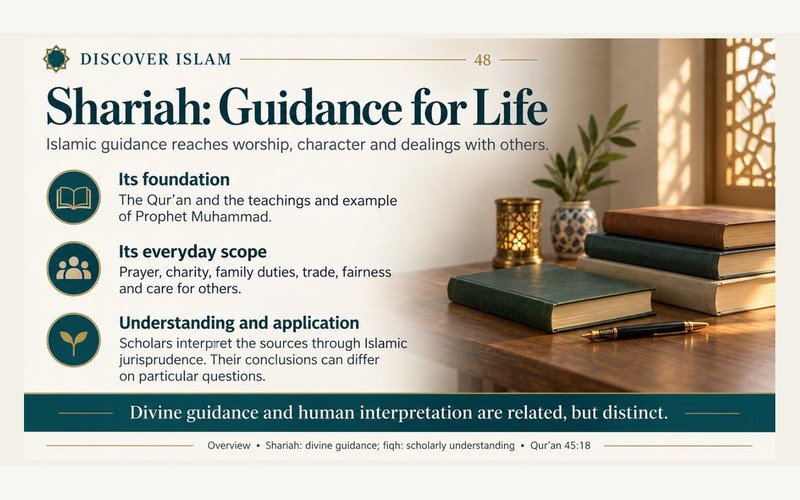
Shariah refers to the path of guidance understood to come from God. It concerns worship, ethics and relationships as well as legal matters. Prayer, giving, family responsibilities and fair trade all belong within its scope. Reducing it to punishments misses much of what Muslims mean by the term.
Sources and human interpretation
The Qur'an and the teachings and example of Prophet Muhammad (PBUH) are central sources. Fiqh means human understanding of religious law: the work through which scholars interpret sources and apply them to circumstances.
The distinction matters. A religious principle, a scholar's ruling and a law passed by a government are not identical things. Understanding a policy requires looking at its sources, purpose and practical effects.
Applying guidance in daily life
Applying religious guidance involves understanding the situation as well as the source. A business agreement, for example, needs clear terms, fair dealing and attention to the rights of everyone involved.
Muslims in India practise their faith within a constitutional and legal setting shared with people of many religions. Religious guidance and the legal enforceability of a particular rule are separate questions.
Discussing concerns openly
Questions about equality, freedom, family rights or punishment should be addressed through the particular rule, interpretation and context at issue. They should not be dismissed simply because the word Shariah is sacred to believers. The useful starting point is clarity: what does the source say, how has it been interpreted, and what would the proposed application mean for the people affected?
Qur’anic verses
Qur'an 45 : 18
Then We placed you on a clear path concerning the matter of religion. Follow it, and do not follow the desires of those who do not know.
Read the verse and Arabic text
Sources: Shariah reference [43]
Read next: Modesty as a shared responsibility