
Related slides 47–48, 33
The religious rule
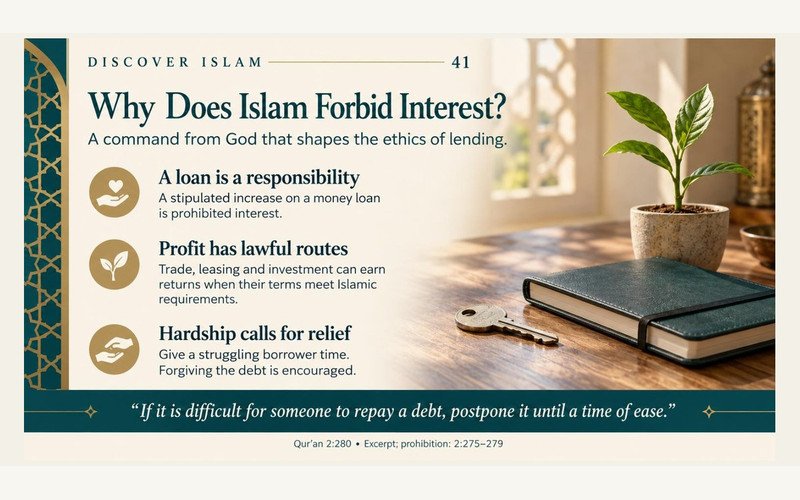
The Qur'an permits trade and prohibits riba. Riba covers prohibited increases in specified transactions. In the mainstream position represented by the International Islamic Fiqh Academy, a stipulated increase on a money loan is prohibited, including conventional loan interest. The rule is not limited to cases where the rate is extremely high.
Why debt raises ethical concerns
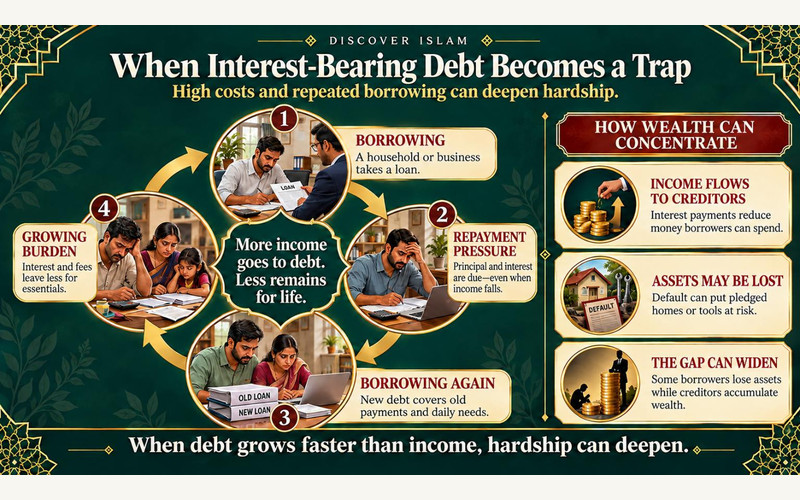
A borrower may face fixed repayments even when income falls. High charges, repeated borrowing and penalties can then leave less money for food, rent or productive work. If property is pledged, default can put it at risk. The gallery illustrates this possible cycle.
It does not follow that every interest-bearing loan causes poverty, that all creditors are rich or that every debt-free transaction is fair. Some conventional loans finance productive activity. The Islamic prohibition is a religious judgment about permissible contracts; a debt-trap example helps explain an ethical concern without proving a universal economic claim.
How profit is distinguished
In Islamic finance, sales, leases and partnerships can earn returns under their respective rules. These transactions involve particular assets, services, ownership duties or business risks. Not every permitted return is variable, and merely renaming interest as ‘profit’ does not make a transaction acceptable. The actual contract matters.
A loan, in this framework, is not meant to generate a guaranteed increase merely because money has been lent. A business partnership is a different relationship and requires its own terms for sharing profit and bearing loss.
The borrower in hardship
Qur'an 2 : 280 calls for time to be given to a debtor in difficulty and commends forgiving the debt. This adds a duty of care to the prohibition. Zakat can also assist eligible debtors, but it is not the same as business finance. The article explains religious principles; applying them to a particular bank product requires examining that product's terms.
Qur’anic verses
Qur'an 2 : 275
Those who consume riba will rise only like someone driven to confusion by Satan's touch. That is because they say that trade is just like riba. But God has permitted trade and prohibited riba. Whoever receives their Lord's warning and stops may retain what is past, and their matter rests with God. Those who return to it are people of the Fire, where they will remain.
Context: Riba means a prohibited increase in specified financial transactions. Its application to ordinary loan interest is explained in Article 24. The verse uses religious imagery; it is not a medical explanation of mental illness.
Read the verse and Arabic text
Qur'an 2 : 276
God removes the blessing of riba and causes charity to grow. God does not love the ungrateful sinner.
Read the verse and Arabic text
Qur'an 2 : 277
Those who believe, do good, establish prayer and give zakat will have their reward with their Lord. They will have no fear, nor will they grieve.
Read the verse and Arabic text
Qur'an 2 : 278
You who believe, be mindful of God and give up the riba that remains due to you, if you are believers.
Read the verse and Arabic text
Qur'an 2 : 279
If you do not, then be warned of war from God and His messenger. If you repent, you may keep your original capital. Do not wrong others, and you will not be wronged.
Context: The warning expresses the gravity of riba in the religious text. It is not permission for individuals to attack banks, creditors or borrowers.
Read the verse and Arabic text
Qur'an 2 : 280
If a debtor is in difficulty, allow time until their situation improves. If you give up the debt as charity, that is better for you, if only you knew.
Read the verse and Arabic text
Sources: IIFA interest resolution [32]
Read next: What halal and haram mean