
In brief
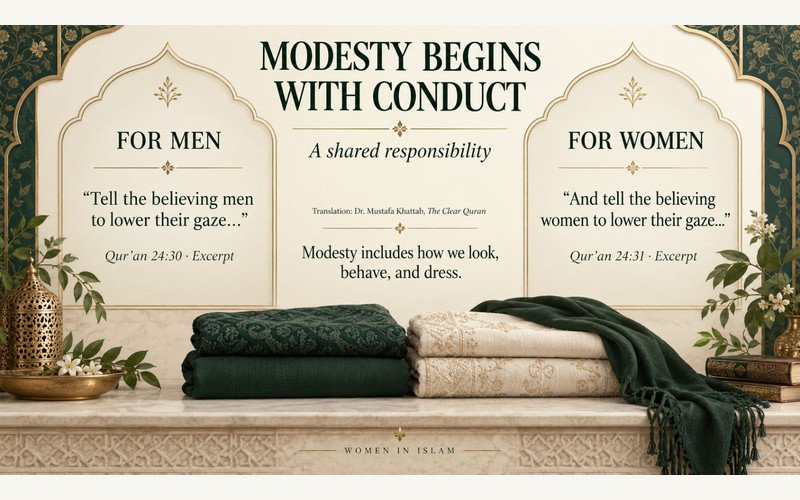
In Islam, modesty is not limited to clothing. It also includes how people look at others, speak, behave and treat one another. The Qur’an addresses believing men and women in its guidance on lowering the gaze and guarding chastity. This makes modest conduct a shared responsibility. Modesty can be expressed through dress, but also through honesty, respectful speech, self-control and consideration for others.
2.1 The concept of modesty for men and women
Modesty is an important part of Islamic ethics. Surah An-Nur 24:30 begins with an instruction to believing men to lower their gaze and guard their chastity; verse 24:31 then addresses believing women with related guidance and instructions about adornment and covering. Reference: https://legacy.quran.com/24/30-31.
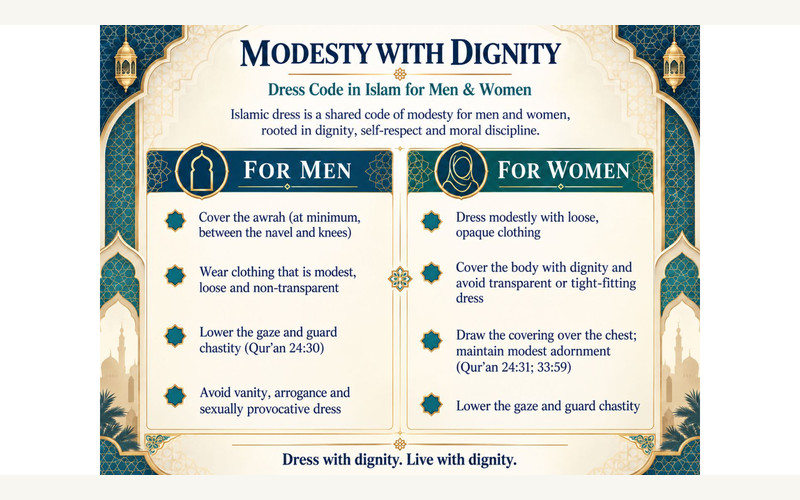
The order matters. Men have responsibilities in how they look at and interact with others. Women also have responsibilities regarding modest conduct and dress. The principles are shared, although specific dress instructions are not identical. Modesty does not mean avoiding ordinary public interaction, education, employment or conversation; it means maintaining respectful boundaries.
2.2 Modesty as a character trait, not just clothing
A person may dress modestly but still behave dishonestly or disrespectfully. Clothing alone cannot prove a person's character. Islamic ethics therefore gives importance to outward conduct and inner qualities.
“Modesty is a branch of faith.” — Prophet Muhammad I. Reference: Sahih Muslim 35a, https://sunnah.com/muslim:35a; Sahih al-Bukhari 9, https://sunnah.com/bukhari:9.
Haya is often translated as modesty or moral restraint. It can include reluctance to do wrong because of awareness of Allah and a sense of responsibility. In everyday life, modesty may be reflected in truthfulness, avoiding mockery, respecting privacy, accepting correction without arrogance and showing consideration for others.
2.3 Inner modesty: behaviour, speech and intentions
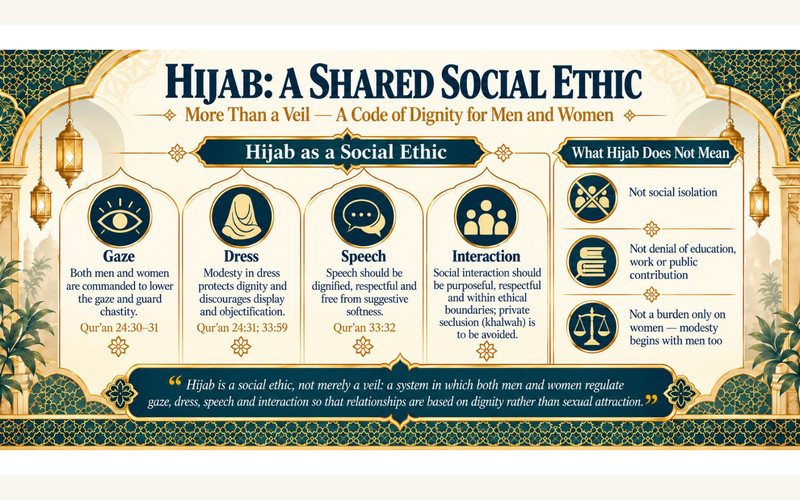
Behaviour: Modest behaviour includes honesty, fairness, self-control and respect for others. It means recognising that people should not be reduced to their appearance. The responsibility for misconduct belongs to the person committing it, not to the person being looked at.
Speech: Respectful speech avoids insults, gossip, slander and humiliating language. The Prophet I said: “Whoever believes in Allah and the Last Day should speak good or keep silent.” Reference: Sahih al-Bukhari 6018, https://sunnah.com/bukhari:6018; also Sahih Muslim 47. This teaches that speech should be truthful, beneficial and respectful.
Intentions: Islamic teachings place importance on intention. Two people may perform the same outward action for different reasons. Believers are encouraged to seek sincerity in worship and conduct, but inner intentions are not fully visible to others and should not be guessed from clothing.
2.4 Respect, dignity and self-discipline
Modesty is connected with respect for oneself and others. Self-discipline means regulating behaviour rather than acting on every impulse. It can include controlling anger, avoiding harmful speech, respecting boundaries and making thoughtful decisions.
Surah Al-Isra 17:70 states that Allah has honoured the children of Adam. This verse concerns human dignity broadly; it is not a specific dress ruling. It provides context for treating people with respect regardless of appearance or religious practice. Reference: https://legacy.quran.com/17/70.
Understanding hijab beyond the headscarf involves outward dress, inner intention and ethical behaviour. These dimensions are related, but clothing alone does not reveal a person's character or spiritual state.
Important distinctions
• Clothing is one expression of modesty, not the whole of it.
• Religious teaching and cultural custom can overlap but should not automatically be treated as identical.
• Appearance alone cannot establish whether someone is honest, respectful or sincere.
• Islamic guidance addresses both men and women, while specific dress instructions may differ.
Sources and further reading
• Qur’an 24:30–31: https://legacy.quran.com/24/30-31
• Qur’an 17:70: https://legacy.quran.com/17/70
• Sahih Muslim 35a: https://sunnah.com/muslim:35a
• Sahih al-Bukhari 6018: https://sunnah.com/bukhari:6018
• Sahih al-Bukhari 1, on intention: https://sunnah.com/bukhari:1